Chapter 2 - THE SECONDS THAT MATTERED
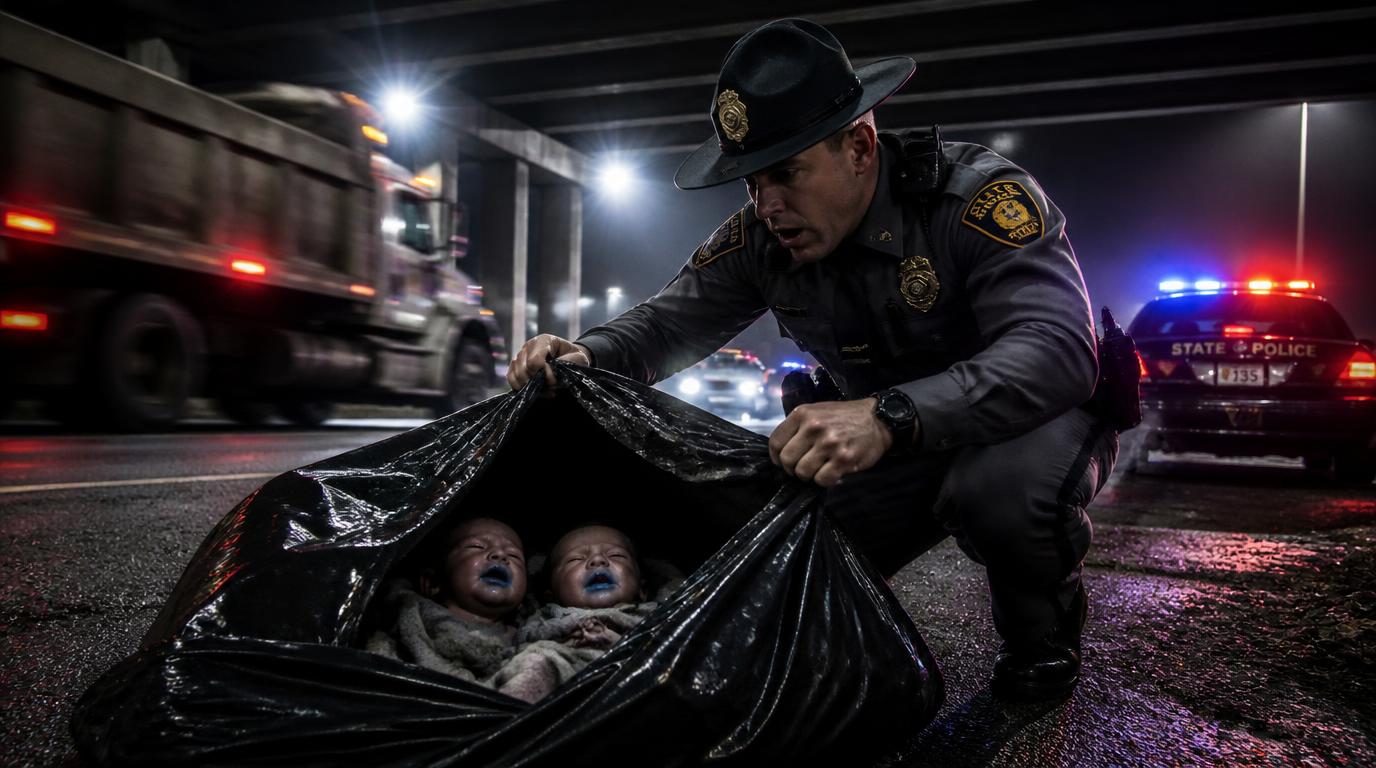
My training kicked in, overriding the primal panic screaming inside my head.
"Dispatch, Lincoln-Fourteen!" I yelled into my shoulder mic, my voice cracking with an urgency that startled even myself. "I have an emergency on Interstate 76 underneath the Mile Marker 42 overpass! I need an ambulance, expedite right now! Infant medical emergency—repeat, two newborns discovered abandoned on the active roadway!"
"Copy, Lincoln-Fourteen, units are en route, ETA eight minutes," dispatch crackled back, their calm voice clashing violently with the chaos racing through my veins.
Eight minutes. They wouldn't survive eight minutes in this sub-freezing air, not with their oxygen failing.
I didn't wait. I hooked my arms under the fleece blanket, lifting the twins carefully against my chest. They felt like feathers, yet terrifyingly fragile, like spun glass. Their skin was freezing to the touch, icy and damp. I scrambled across the highway lanes, abandoning protocol, and kicked my cruiser's passenger door open. I slid into the back seat where the heater vents were fully open, pulling the twins into the warmth of the cabin.
I stripped off my heavy utility belt, tossing it onto the floorboards, and used my bare hands to unwrap the fleece blanket. It was soaked through with melting frost and condensation from inside the bag. I grabbed a clean, dry wool blanket from my emergency supply kit in the trunk—which I had thankfully tossed into the back seat earlier that evening—and wrapped them snugly, rubbing their tiny backs and legs with frantic, circular motions to stimulate circulation.
"Come on, little ones. Breathe. Stay with me," I pleaded, my voice breaking.
The smaller twin—a little boy with a tuft of dark hair—let out a weak, sputtering cough. His blue lips parted, and he took a ragged, desperate lungful of warm air. His tiny chest heaved as oxygen finally flooded his bloodstream. Beside him, his twin sister stirred, letting out a thin, high-pitched cry that sounded more like a kitten's mew than a human baby.
Hearing that cry was the best sound I had ever encountered in my life. They were fighting back.
I kept my hands moving, generating friction, warming their icy skin while keeping a watchful eye on the highway behind me. Within four minutes—feelings like an eternity—the deafening wail of sirens tore through the night air. Red and blue emergency lights washed over the concrete pillars, casting long, frantic shadows across the underpass. An unmarked supervisor unit screeched to a halt behind my cruiser, followed closely by a county ambulance with its lights blazing.
Paramedics spilled out of the back of the rig, medical bags in hand, rushing toward my cruiser.
"In here! They're responsive, but hypothermic and suffering from oxygen deprivation!" I called out, holding the door wide open.
The lead paramedic, a veteran named Sarah with eyes full of grim determination, climbed into the back seat with an oxygen kit. She took one look at the twins, her expression hardening. She immediately placed mini oxygen masks over their tiny faces, checking their pulses with swift, practiced precision.
"You kept them alive, Trooper," Sarah said, glancing up at me as she barked orders to her partner to prep the incubators. "Ten minutes longer in that bag and they would have been gone. Who the hell does something like this?"
That was the question hanging heavy in the freezing air. Who abandons newborn twins in a trash bag on a dark interstate highway?
As the paramedics loaded the babies into the warm interior of the ambulance, I stepped out onto the asphalt, my knees suddenly feeling weak. I picked up my flashlight from the lane where I had dropped it, and my eyes drifted back to the spot where the black bag had rested against the concrete pillar.
That was when I noticed something I had missed in the panic.
Just a few feet away from the pillar, half-buried under a pile of wind-blown leaves and discarded fast-food wrappers, lay a discarded canvas duffel bag. It was unzipped, its contents spilling out onto the frozen dirt.
I walked over, clicked my flashlight on, and directed the beam downward. My breath caught in my throat. Spilled across the ground were blood-stained hospital blankets, a discarded package of sterile medical clamps, and a receipt fluttering in the wind. I crouched down, gloved fingers gently picking up the receipt. It was from a private medical clinic located thirty miles away in the city, dated just six hours earlier.
May you like

The paper listed a name, a consultation fee paid in cash, and a patient ID number.
This wasn't a random act of cruelty by a desperate transient. This was calculated. Someone had planned this, and they had left a paper trail leading straight to their doorstep.