Chapter 1 - Ten Years of Shadows
For ten years, I saved like a woman who already knew nobody was coming to save her.
There was no inheritance waiting in a dusty attic, no rich uncle eager to pay off my student loans, and certainly no safety net woven by the people who brought me into this world. My father, Richard Harper, viewed financial support as a ledger of debts to be collected later, while my mother, Linda Harper, viewed every cent earned under her roof as communal property until she personally allocated it elsewhere.
So, I built my own floor beneath my feet, one calculated sacrifice at a time.
I skipped vacations, trading the sun-drenched beaches of Cabo or the historic streets of Europe for the fluorescent glare of my cubicle and the quiet, suffocating loneliness of my studio apartment. I packed the same turkey sandwiches in tinfoil day after day until I grew so tired of the smell that I would gag opening the plastic container, yet I swallowed the food anyway because saving six dollars meant keeping six dollars. I drove a dented, pale-blue Honda Civic with a broken air conditioner through three brutal California summers, sweating through my business casual blouses on the highway, arriving at work with salt stains on my collar because every dollar I didn't spend on comfort was one dollar closer to a front door with my name on it.
Not a mansion.
Not a sprawling estate on a cliff overlooking the Pacific.
Just a small, unassuming place outside San Diego with peeling white walls, a narrow wooden porch, and enough quiet surrounding it that I could finally hear myself think without someone telling me what my thoughts should be.
The journey to that front door was paved with psychological exhaustion. Growing up in Dallas, Texas, my identity had never belonged to me. I was the eldest daughter—the designated shock absorber for family financial crises, the eternal babysitter for my younger sister Chloe, and the built-in retirement plan my parents spoke about with casual entitlement. Chloe was the sun; she was artistic, delicate, and perpetually helpless, requiring a financial ecosystem to support her whims. I was the infrastructure—cold, utilitarian, and expected to bear heavy loads without complaint.
When I finally signed the closing papers at the title office, my hands shook so violently I could barely grip the pen. The notary, a kind older woman with silver hair, smiled warmly and slid the final deed across the mahogany desk.
"Congratulations, Ms. Harper," she said. "It's all yours."
I didn't smile back immediately. I walked out of the building, climbed into the sweltering interior of my dented Honda, and sat behind the wheel in the empty parking lot. The dam broke. I cried so hard into a crumpled fast-food napkin that my chest ached, great, wracking sobs of relief mixed with the phantom weight of a decade spent hiding my bank statements, lying about my bonuses, and dodging my mother's interrogations.
I thought I had just bought freedom.
I didn't know I had declared war.
The first tactical error of my new life was believing I owed my family the courtesy of face-to-face truth.
Instead of mailing a copy of the deed or sending a polite group chat message from the safety of the Pacific Time Zone, I booked a weekend flight back to Dallas. I wanted to see their faces. I wanted—foolishly, childishly—to witness a flicker of maternal pride. I wanted Linda Harper to look at her eldest daughter and realize that the quiet girl she had spent twenty-something years diminishing had quietly built an empire out of spare change and stubbornness.
It was a fatal miscalculation.
The Dallas heat hit me like a physical blow when I stepped out of DFW Airport, but it was nothing compared to the stifling atmosphere inside my childhood home.
The house smelled of lemon furniture polish and stale ambition. My mother was standing by the kitchen sink when I walked through the back door, her silhouette rigid, positioned as if she owned not just the kitchen, but every breath taken within a fifty-mile radius. My father sat at the dining table, his reading glasses low on his nose, pretending to read the morning newspaper with an intensity that suggested world events were far more fascinating than his own daughter walking through the door after six months away.
My sister Chloe leaned against the hallway archway, wearing that soft, knowing little smile she always wore whenever she sensed an incoming reprimand—the smile of someone who had never had to dodge a blow because she was always standing safely behind our mother.
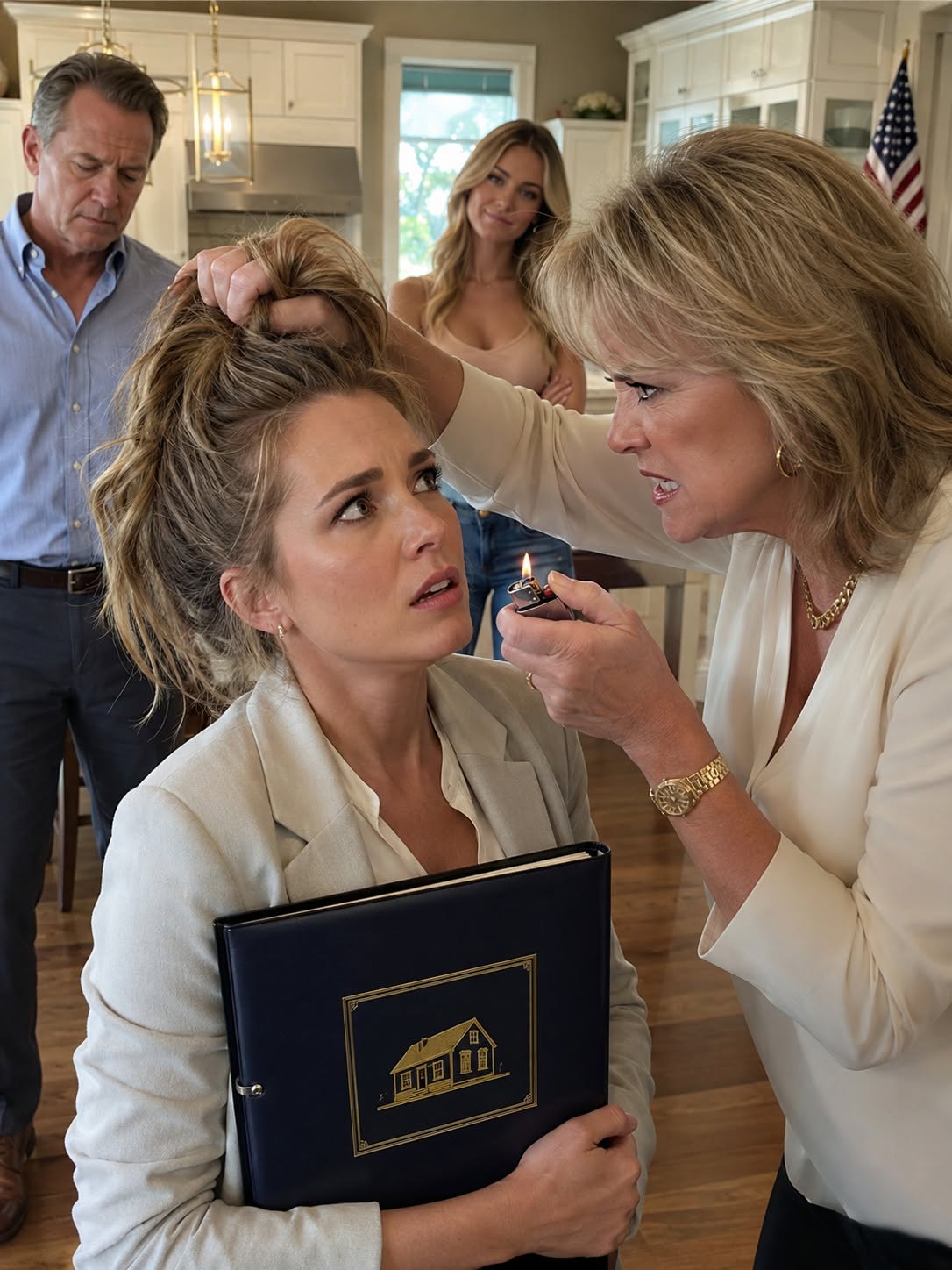
I stopped by the kitchen island, holding a thick leather folder tight against my chest like a shield.
"I bought a house," I said, my voice steady, though my heart hammered against my ribs. "I get the keys in two weeks."
For one second, the kitchen went completely still. Even the refrigerator hum seemed to die down.
Then, my mother's face shifted.
It didn't soften into surprise. It didn't bloom into pride. It curdled into something cold, ancient, and predatory.
"You’re not even married," she said, her voice dropping an octave, devoid of warmth. "What do you need a house for?"
I waited. I stood there, blinking, waiting for someone to laugh. Waiting for my father to clear his throat and say, Just kidding, Linda, congratulations Emily. Waiting for Chloe to roll her eyes and say, Mom, come on, let her have her moment.
No one laughed. The silence stretched, heavy and suffocating.
"That money was for Chloe’s wedding," my mother said, stepping away from the sink, her movements deliberate and terrifyingly slow. She closed the distance between us like a cat stalking a cornered bird. "For the family. For something that actually matters."
There it was. The foundational theorem of the Harper family mathematics: My labor was shared property, but my autonomy was an act of treason. My dreams were deemed selfish because they didn't directly subsidize Chloe's upcoming nuptials to a man who sold industrial HVAC units and expected a three-tier cake that cost more than my first car.
I didn't yell. I didn't burst into tears. I looked straight into my mother’s pale, unforgiving eyes, and I gave her the one thing she could never process.
"No," I said quietly.
That single word didn't just anger her. It exposed her entire delusion.
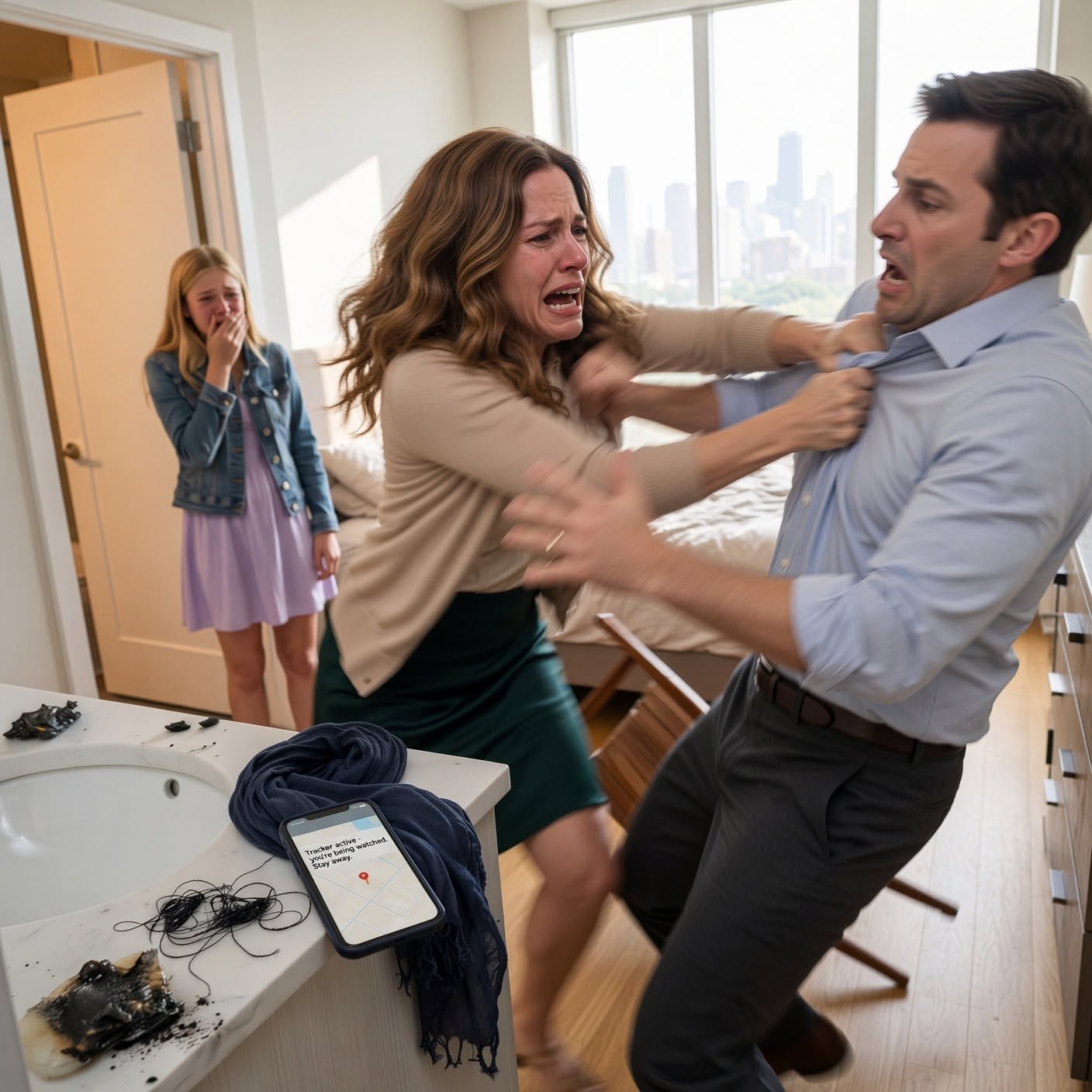
She crossed the remaining space between us with shocking speed. Before I could flinch, her hand shot out, her fingers twisting violently into my hair, yanking my scalp back so hard my eyes watered and a sharp gasp tore from my throat.
Then came the tiny, metallic click of a lighter.
A pale blue flame flickered into existence right in front of my face, casting dancing shadows across my mother's twisted features. The heat licked dangerously close to my eyelashes.
My father flinched behind his newspaper. "Linda..." he whispered, his voice thin and paper-dry.
He didn't stand up. He didn't drop the paper. He merely offered a token objection that gave my mother full permission to continue.
Chloe didn't move an inch. Her smile only widened, delighted by the spectacle.
My mother held the lighter close enough that I felt the scorching heat singe the fine hairs on my cheek. Her breath smelled of peppermint and malice.
"If you won’t belong to this family the easy way," she hissed, her voice vibrating with venom, "you’ll learn the hard way."
Some women scream when they realize the people who brought them into the world view them as livestock. Some cry, begging for mercy, trying to reason with an unreasonable tyrant.
I went entirely silent.
May you like

Because in that exact, terrifying fraction of a second, the fog lifted from my entire childhood. I finally understood the terrifying truth: My mother hadn't lost control in a moment of passion. She had simply revealed what she had always believed—that she owned me, body, mind, and bank account.
And I knew, with absolute clarity, that I would rather burn alive than give her a single dime.