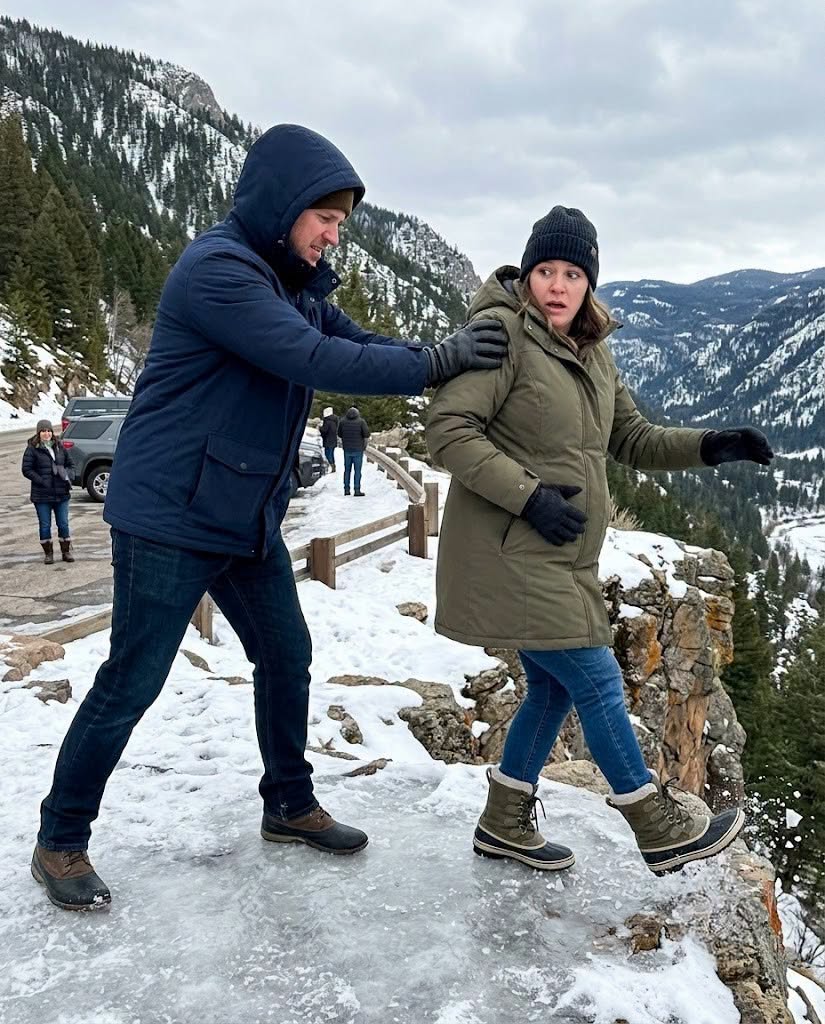
The Doctor Told The Millionaire There Was Nothing Left To Do — But A Poor Girl Stepped In...
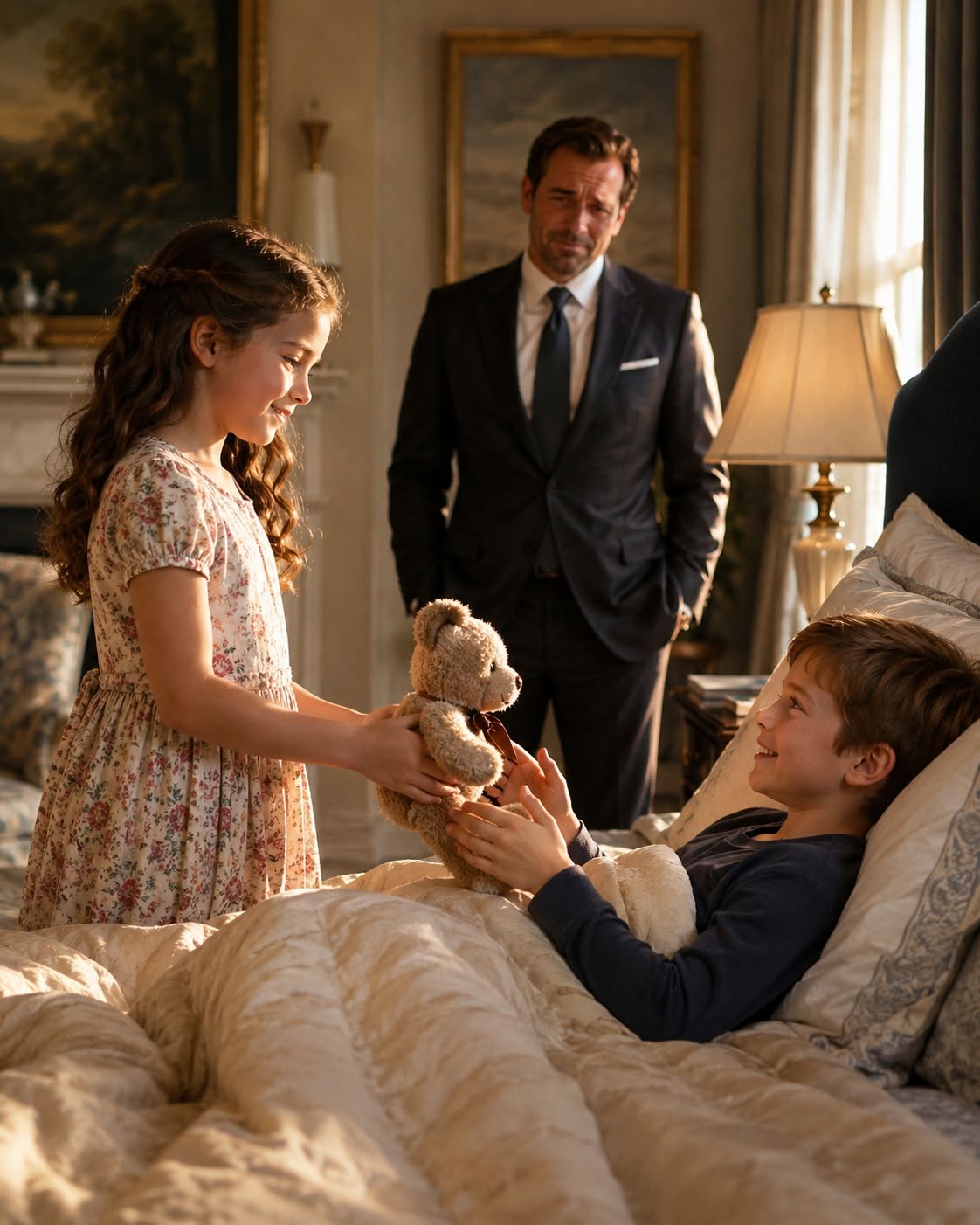
The Millionaire Was Told His Son Had Weeks to Live—Then a Poor Girl Walked Into the Hospital and Said, “Let Me Try”
Robert Blackwood had billions, private doctors, a pharmaceutical empire, and a son dying in a silent hospital bed.
The doctor told him there was nothing left to do but prepare for goodbye.
Then a twelve-year-old girl in a thin blue jacket touched the boy’s hand and whispered, “I had the same disease—and they lied about how I survived.”
PART 1 — The Girl Who Knew Before He Spoke
Robert Blackwood did not cry in boardrooms.
At fifty-two, he had built Blackwood Pharmaceuticals into one of the most powerful biotech companies in America. Senators took his calls. Hospitals accepted his donations before asking questions. Competitors lowered their voices when his legal team entered the room.
But that morning, standing outside his fourteen-year-old son’s hospital room at Massachusetts General, Robert pressed one hand against the glass wall and cried without sound.
Inside the room, Ethan Blackwood lay motionless beneath white blankets, surrounded by machines that breathed, measured, warned, and waited. Eight months earlier, Ethan had been running basketball drills until sunset, arguing about homework, and playing piano too loudly after dinner. Now his hands lay open at his sides, thin and still, as if childhood had quietly left them.
Dr. Harrison stood beside Robert with a folder held against his chest.
The doctor’s eyes were kind.
That made it worse.
“There is nothing more we can do to save him,” Harrison said. “His neurological decline is accelerating. We can keep him comfortable, but medically, Mr. Blackwood, we are out of options.”
Robert heard the words.
He refused them.
“No,” he said.
Diana, his ex-wife, sat in the corner of the room with Ethan’s copy of The Hobbit open on her lap. Her face was pale and composed in the way only a mother who had spent too many nights in hospital chairs can manage. She had already begun grieving in silence because someone had to remain gentle while Robert fought the universe.
“Robert,” she whispered. “Please.”
He turned on Harrison.
“I own one of the largest pharmaceutical research networks in the country. I have funded every PNDD study you have asked me to fund. I have flown specialists from three continents. Do not stand in front of my child and tell me money, science, and every brilliant mind in your profession have produced nothing but comfort.”
Harrison’s voice lowered.
“Progressive Neural Degenerative Disorder is still beyond current treatment. Ethan may have weeks.”
The word weeks cut through Robert’s ribs.
He walked out before anyone could watch him break.
Boston was cold that afternoon, the kind of October cold that made every breath feel borrowed. Robert refused his driver and walked without direction until the glass towers of the financial district gave way to narrow streets, hanging signs, steam rising from restaurant doors, and the warm spice-scented air of Chinatown.
He entered a small tea shop because the bell above the door sounded human.
An elderly woman behind the counter looked at him once and said, “You need strong tea.”
Robert almost laughed.
Instead, he sat.
In the corner, a girl of about twelve watched him over an open math book. She had light brown hair tied in a ponytail, serious gray eyes, and a blue jacket too thin for the weather. Her shoes were worn at the soles, but her gaze was direct enough to make powerful men uncomfortable.
“You’re sad,” she said.
Robert looked up.
“Excuse me?”
“About your son,” the girl said. “The doctors say he can’t come back.”
The cup in Robert’s hand clicked hard against the saucer.
“How do you know that?”
She closed her book.
“My name is Lily Walker,” she said. “Three years ago, doctors said the same thing about me.”
Robert stared at her.
“That is impossible.”
“They said I had PNDD,” Lily continued. “They said I would stop walking, then stop talking, then stop waking up. They were wrong.”
His breath caught despite himself.
“Who treated you?”
“My mother.”
A bitter disappointment rose in him.
He had heard miracle stories before. Desperate men attracted them like blood in water: oils, magnets, prayers, powders, illegal injections, distant clinics with glossy brochures and no data. Robert stood too quickly.
“I’m sorry. I need to go.”
Lily grabbed his wrist.
Her hand was small.
Her grip was not.
“You don’t believe me,” she said. “But tonight, when you sit beside your son and watch him disappear, you’ll remember that I walked into this shop on my own legs.”
The bell above the door rang again.
A woman in a worn wool coat stepped inside, university ID swinging from her neck. Lily turned.
“Mom,” she said, still watching Robert. “This is Mr. Blackwood. His son needs us.”
The woman’s face changed.
Caution.
Fear.
Recognition.
Robert held up the slip of paper Lily had pushed across the table.
“Grace Walker?”
The woman’s voice was quiet.
“Yes.”
Robert looked from the poor girl who should not have known his grief to the mother who looked as if she had already fought a war no one believed.
“If what your daughter said is true,” he said, “then I need to hear everything.”
Grace Walker tightened her hand around Lily’s shoulder.
Across the shop, Mrs. Chen stopped wiping the counter.
May you like


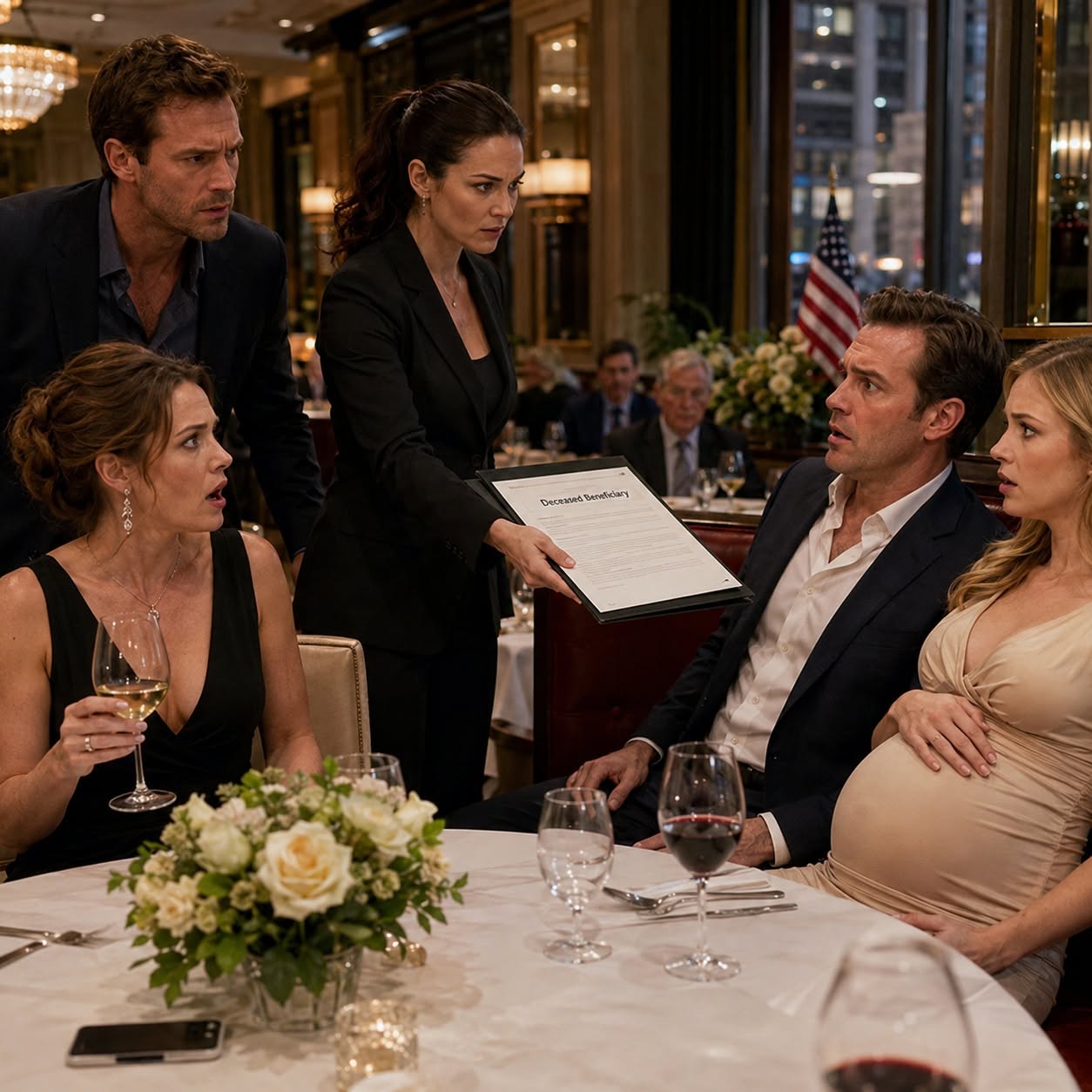
And Lily, with the calm certainty of someone who had survived being dismissed once already, said, “Then bring me to Ethan.”
...Read more in C0mment 👇