Chapter 2 - The Court of Public Opinion
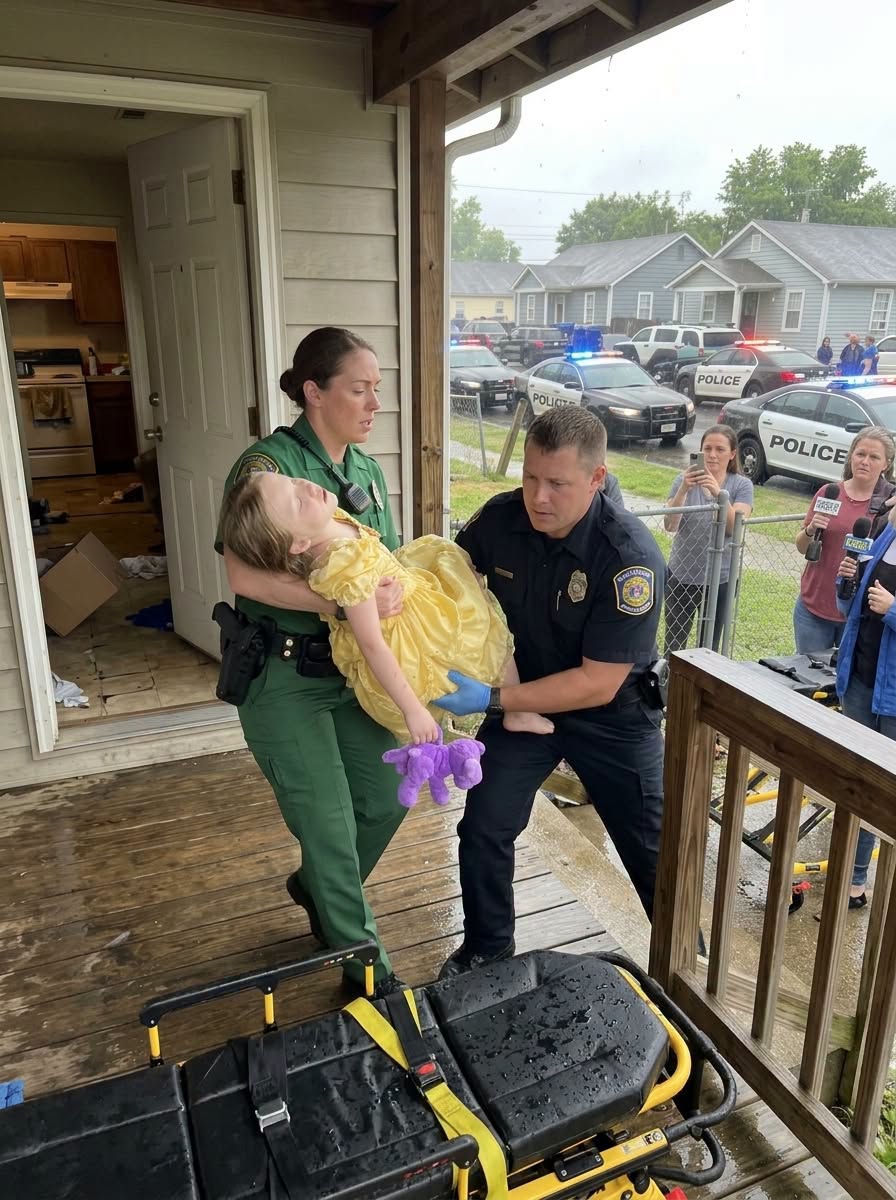
Within forty-eight hours of Ashley’s rescue, the local news stations had turned the story into a 24-hour moral spectacle.
“The Ghost Father of Maple Street,” flashed the bold red banner across cable news screens, accompanied by a grainy, tired-looking photograph of Andrew standing outside his rental house taken months earlier. Commentators with immaculate hair and expensive suits dissected his character with clinical detachment, labeling him a coward who had buckled under the financial strain of single fatherhood and fled into the night, leaving his innocent seven-year-old daughter to starve.
Social media was even more vicious. Local Facebook groups exploded with thousands of shares, vitriolic comments, and armchair detectives demanding that the police issue a nationwide manhunt for a man they had already convicted in the court of public opinion.
Inside the sterile, fluorescent-lit confines of the county hospital room, however, none of that noise mattered.
Ashley was resting quietly in a pediatric bed, hooked up to intravenous saline drips that slowly restored hydration to her depleted cells. Her color had improved slightly, though the dark circles beneath her eyes remained deep and bruised. Her beloved stuffed puppy, Buddy—now thoroughly washed and dried by a kind pediatric nurse—rested on the pillow right beside her cheek.
Officer Natalie sat in a plastic chair beside the bed, thumbing through a stack of paperwork she had pulled from the precinct file. She had spent the last two days combing through Andrew’s background, trying to find any clue that might explain why a devoted father would allegedly walk out on his sick child.
The picture that emerged from financial records and landlord statements was not one of a deadbeat, but of a man drowning in a broken system.
Andrew Harris, thirty-two, had lost his job at the regional automotive parts warehouse eight months prior when the plant downsized. Since then, he had worked a patchwork of grueling odd jobs—landscaping, night-shift stocking, manual labor—just to keep the rent paid and buy Ashley’s expensive chronic-condition medications. He had no criminal record, no history of substance abuse, and zero friends or family living within a five-hundred-mile radius. He was entirely on his own.
“He didn’t run,” Natalie muttered to herself, staring at the timeline of receipts she had recovered from his kitchen counter.
The store where Andrew allegedly went to buy rice and medication was three miles away—a forty-five-minute walk each way, especially given that his old sedan had suffered a catastrophic engine failure two weeks prior, leaving him completely carless.
Yet, public sentiment remained ironclad. The neighborhood association downtown had already started a petition demanding his immediate arrest if and when he was ever found, convinced he had dumped his daughter to escape the financial burden.
“Officer Natalie?”
Natalie snapped out of her thoughts and looked up. Ashley was awake, her large brown eyes blinking slowly against the hospital lights.
“Hey there, kiddo,” Natalie said, softening her face into an immediate, welcoming smile as she stood up and walked over to the bedside. “How are you feeling today? Any tummy aches?”
Ashley shook her head slightly, her fingers curling into the fabric of Buddy’s ear. “A little bit better. The lady with the cart brought me vanilla pudding earlier.”
“Well, vanilla pudding is practically a medicinal miracle,” Natalie joked gently, pulling up her chair. “Ashley, do you mind if I ask you a few questions about the day your daddy left?”
The little girl’s face tightened. A shadow of anxiety crossed her features, and she pulled the hospital blanket up toward her chin. “He said he’d be right back. He told me to watch cartoons and wait by the window.”
“I know he did, sweetie,” Natalie reassured her, keeping her voice as steady as possible. “And I believe you. But do you remember anything unusual happening right before he left? Did he get a phone call? Did someone come to the door?”
Ashley stared up at the acoustic ceiling tiles, searching her tired seven-year-old memory. “He was looking at his phone. He looked really, really worried. He put on his green jacket—the one with the broken zipper—and grabbed his wallet. He told me he had to run down to the pharmacy super quick because my medicine ran out, and he had to get groceries before the store closed.”
“Did he take his car?”
“No,” Ashley whispered. “The car hasn’t worked in a long, long time. Daddy always walks or takes the bus, but the buses stop running early on Sundays.”
Natalie nodded slowly, piecing the grim puzzle together in her mind. It was Sunday evening when he left. The pharmacies in that industrial sector closed early, and public transit in their corner of the county was notoriously unreliable.
“Did he have his keys, Ashley?”
“He had his house key on a blue lanyard,” she nodded.
Natalie’s breath caught. If Andrew had his house key on him, and he intended to return in thirty minutes, why hadn't he come back? A sudden accident on the dark, unlit roads surrounding the industrial canal? A medical emergency?
Before Natalie could pursue the line of questioning further, the hospital room door clicked open.
A detective in a rumpled gray suit stepped inside, holding a plastic evidence bag containing a battered leather wallet and a set of keys on a blue lanyard.
Natalie stood up immediately, stepping into the hallway to meet him.
“Where did you find those?” she asked, her voice dropping to a sharp whisper.
The detective let out a heavy sigh, rubbing the back of his neck. “Road crew found them early this morning about two miles from his house, near the old drainage culvert off River Road. The heavy rains earlier in the week caused flash flooding through that entire low-lying basin.”
May you like

He held up the plastic bag, letting the waterlogged leather wallet and the blue lanyard sway slightly in the fluorescent light.
“Search and rescue is combing the banks of the creek right now,” the detective added grimly. “And honestly, Natalie? Given the current velocity of that runoff water, we aren't looking for a runaway father anymore. We’re looking for a body.”