THEY TOLD ME TO HIDE MY DAUGHTER—THEN SHE WALKED ONSTAGE IN FRONT OF 160 PEOPLE
PART 1
“Get that child out of sight before the guests arrive.”
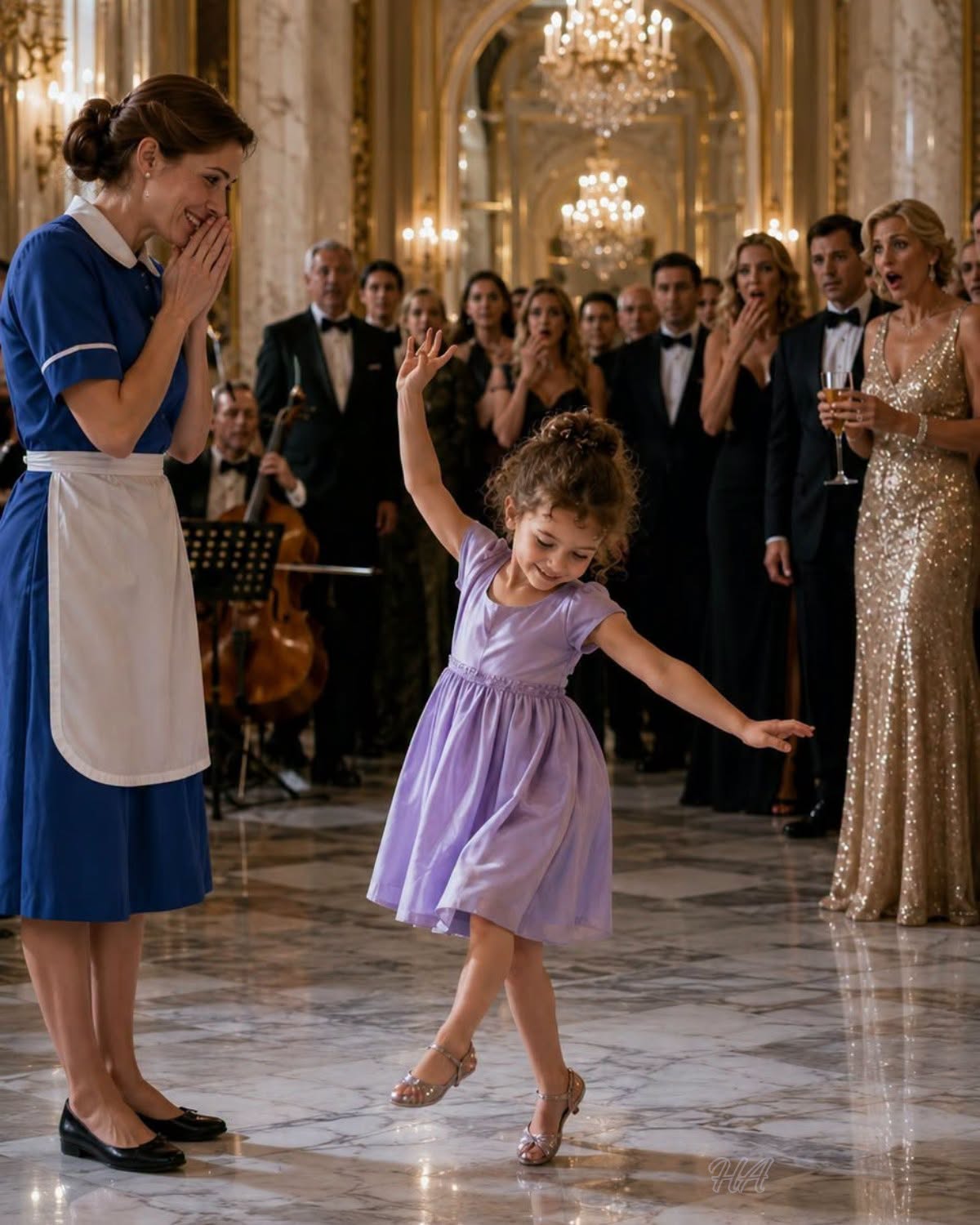
My boss’s fiancée pointed at my three-year-old daughter as if she were something I had spilled on the marble floor.
Two hours later, my little girl walked onto the gala stage—and did something that made every person in that mansion go completely silent.
My name is Maria Lopez. I was twenty-nine, a single mother, and for six years I had worked as a housekeeper inside a forty-eight-room mansion in Greenwich, Connecticut.
The estate belonged to Alexander Roberts, a thirty-eight-year-old tech and real estate billionaire whose name appeared on hospitals, university buildings, and charity checks all over the East Coast.
That night, his family foundation was hosting its annual gala.
There would be 160 guests, including politicians, celebrities, investors, and enough old money to make someone like me feel invisible without anyone saying a word.
I had been working since five that morning.
I polished silverware until I could see my tired face in every spoon. I arranged white roses on twenty tables. I checked every name card twice and helped the catering staff carry trays that cost more than my monthly rent.
But my mind wasn’t on the gala.
It was on my daughter, Emmy.
She was hiding in the service wing with a blanket, a box of crackers, and her favorite stuffed rabbit.
Her babysitter had canceled that morning. I had no relatives nearby, and calling out of work wasn’t an option. My rent was overdue, and Emmy had started coughing again.
So I brought her with me.
“I’ll be quiet, Mommy,” she promised.
And she tried.
She really did.
But the youth dance company had been rehearsing in the ballroom for three weeks, and Emmy could hear the music through the walls.
That afternoon, I found her standing beside a half-open service door, watching the teenage dancers practice beneath the chandeliers.
Her eyes were wide.
“Mommy,” she whispered, “they’re flying.”
My heart hurt when she said it.
Emmy had loved music since she could stand. In our tiny apartment, she danced between the couch and the kitchen table while I folded laundry.
We couldn’t afford lessons.
We could barely afford groceries.
Still, every night after work, she asked me to play songs on my phone. Then she would spin across the worn carpet, serious and focused, as though she were performing for a real audience.
I crouched beside her.
“They’ve practiced for a long time,” I said.
“So have I.”
I almost laughed.
Then I heard heels clicking against the floor behind us.
Valerie Kensington stood in the hallway wearing a fitted white dress and a diamond bracelet that probably cost more than everything I had ever earned.
She was Alexander’s fiancée and the official chair of the gala.
She looked at Emmy.
Then she looked at me.
“Is that your daughter?”
“Yes, ma’am. My sitter canceled, but she won’t cause any trouble.”
Valerie’s expression hardened.
“She shouldn’t be here.”
“I understand.”
“No, I don’t think you do.” She lowered her voice. “Our guests cannot see a housekeeper’s child wandering around during the biggest event of the year.”
Emmy moved closer to my leg.
“She was only watching the dancers.”
“This is a charity gala, Maria. Not free entertainment for your family.”
The words landed harder than I expected.
I had spent years learning how to swallow humiliation quietly. When you clean up after powerful people, you hear things they assume you’re too unimportant to remember.
But Emmy heard her.
That was different.
I looked down and saw my daughter staring at her shoes.
“I’ll take her back,” I said.
“Keep her in the service corridor. And make sure she stays quiet.”
Valerie turned and walked away.
I wanted to tell her that my daughter was not something shameful.
I wanted to remind her that the gala was supposedly raising money for disadvantaged children.
Instead, I took Emmy behind a gray curtain near the kitchen.
“Did I do something bad?” she asked.
“No, baby.”
“Then why can’t they see me?”
I didn’t know how to answer without teaching her something ugly about the world.
So I kissed her forehead.
“Stay right here. I’ll come back as soon as I can.”
She sat on the floor with her rabbit in her lap while music drifted through the wall.
What I didn’t know was that Emmy had been watching those rehearsals for weeks.
Whenever I worked late, she came with me. She stood behind that same service door and memorized every movement she could see.
At home, she practiced in silence.
I thought she was making up her own dances.
She wasn’t.
At 8:18 p.m., twelve minutes before the foundation’s main performance, everything fell apart.
Sophie Bennett, the fifteen-year-old lead dancer, collapsed backstage with a fever.
The dance director checked her temperature and immediately called her parents.
Sophie couldn’t perform.
There was no understudy.
The director told Valerie they would have to cancel the entire number.
“You can’t cancel it,” Valerie snapped. “It’s the centerpiece of the evening.”
“The choreography depends on Sophie. No one else knows her part.”
“Then change it.”
“With twelve minutes left?”
Alexander Roberts stepped backstage, still holding his drink.
“What happened?”
Valerie forced a smile.
“A minor issue.”
“It isn’t minor,” the director said. “Our lead dancer is sick.”
Alexander looked toward Sophie, who was pale and shaking beneath a blanket.
“Then she doesn’t dance.”
Valerie stared at him.
“Alexander, the donors are expecting this.”
“They’ll survive.”
Before anyone could decide what to do, one of the technicians accidentally started the full music track.
The opening notes thundered through the ballroom.
The guests stopped talking.
The curtains began to move.
And somewhere behind me, a woman gasped.
I ran toward the gray curtain.
Emmy’s blanket was there.
Her crackers were untouched.
Her stuffed rabbit lay on the floor.
But my daughter was gone.
Then I heard the first murmur from the ballroom.
I pushed through the staff entrance and froze.
Emmy was standing in the center of the stage.
She wore a simple yellow dress. One of her shoes was untied. Her dark curls were messy from hiding all afternoon.
Under the chandeliers, she looked impossibly small.
Valerie rushed toward the stage.
“Someone get her down!”
But before anyone could reach her, Emmy lifted both arms toward the ceiling.
The orchestra track swelled.
And my three-year-old daughter began to dance.
Not like a child playing.
Not like someone copying movements she barely remembered.
She performed Sophie’s part.
Every turn.
Every step.
Every pause.
The teenage dancers stared at her from backstage.
The guests stopped whispering.
Even Valerie stood frozen beside the curtain.
I covered my mouth, terrified she would fall.
But Emmy moved across that stage as if she had been born knowing exactly where the light would find her.
Then she reached the most difficult section of the routine.
The part Sophie had struggled with for weeks.
Emmy turned once.
Twice.
Then landed perfectly, one small hand pressed over her heart.
No one clapped.
Not yet.
The entire room was too stunned to move.
Beside me, the dance director went pale.
“That’s impossible,” she whispered.
I looked at her.
“What?”
She didn’t take her eyes off my daughter.
“We changed that section yesterday. There were no staff members in the ballroom.”
My stomach dropped.
Onstage, Emmy slowly turned toward Alexander Roberts.
And when he saw her face clearly beneath the spotlight, his glass slipped from his hand and shattered on the floor.
He stared at my daughter as if he had seen a ghost.
Then he whispered a name I had never heard before.
May you like


“Claire?”
TO BE CONTINUED IN PART 2.