Chapter 1 - The Weight of Expectations
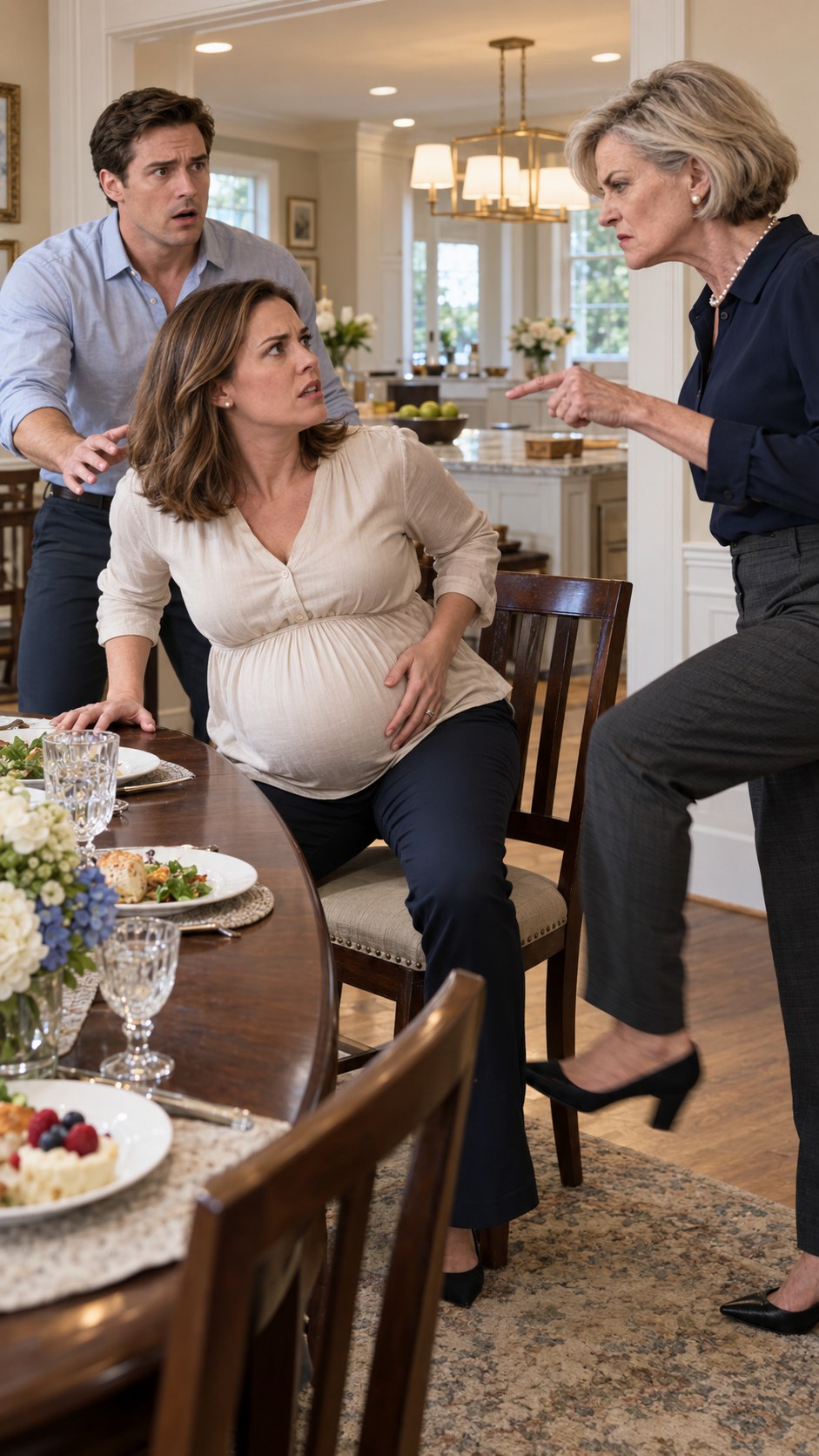
The Sunday evening sunlight cast long, amber shadows across the polished hardwood floors of Arthur and Margaret Sterling’s dining room, but the atmosphere inside was as cold as winter frost.
Emily sat at the mahogany dining table, her thirty-two-week pregnant belly pressing heavily against the edge of the wood. Every breath felt restricted, every movement a calculated effort against the sheer physical weight of carrying a child. Her lower back ached with a dull, persistent throb that had accompanied her through every waking hour of the third trimester.
She had not wanted to come to this dinner.
Hours earlier, as the sun began its slow descent outside their apartment window, Emily had gently touched her husband Daniel’s arm and told him the truth.
“Daniel, I’m exhausted,” she had murmured, her voice laced with exhaustion. “My back is killing me, the baby kept me awake kicking until four in the morning, and you know how your mother gets whenever the topic of the new house comes up. Can we please just stay home tonight?”
Daniel had looked down at her with immediate, tender concern. He had stroked her hair and kissed her forehead. “Of course we can stay home, Em. I’ll call my parents, tell them you’re not feeling well, and order takeout. You don’t owe them an audience.”
But Emily had hesitated. She knew the cost of staying home. If they didn't show up, Margaret would spend the entire evening spinning a narrative about how Emily was deliberately isolating Daniel from his family, weaponizing their unborn child as a tool for emotional leverage. For months, Emily had played the role of the peacekeeper, swallowing insults disguised as advice, smiling through passive-aggressive jabs about her cooking, her homemaking, and her career choices, all in the exhausting hope that if she just showed enough patience, Margaret would eventually accept her.
“No,” Emily had sighed, shaking her head. “If we stay home, your mother will call every hour demanding explanations, or worse, she’ll show up at our doorstep unannounced with leftover pot roast and judgment. Let’s just go. If I stay calm and keep quiet, maybe we can get through one family dinner without a war.”
It was a fatal miscalculation.
Now, sitting across from Margaret Sterling’s razor-sharp gaze, Emily realized just how deeply she had underestimated her mother-in-law's capacity for malice.
Margaret sat at the head of the table like a queen presiding over a medieval court. Her silver-streaked hair was pulled back into a severe, immaculate chignon; her silk blouse was ironed without a single wrinkle; and her fingers, adorned with heavy diamond rings, tapped a rhythmic, impatient tattoo against the crystal water glass.
For years, Emily had made excuses for Margaret. When Daniel and first started dating, Margaret had dismissed Emily as a temporary distraction—a middle-class girl with an ordinary job who didn't possess the prestigious lineage or financial pedigree the Sterling family demanded. When they got engaged, Margaret had wept openly, not tears of joy, but tears of mourning, telling Daniel that he was throwing his future away on someone who couldn't possibly appreciate his potential.
And Daniel had always defended Emily. He was a good man—steady, protective, and deeply devoted to his wife. But for the longest time, Daniel suffered from the blind spot common to children raised by narcissistic parents: he believed that beneath his mother’s sharp tongue and suffocating control lay a core of genuine maternal love. He kept hoping that if he achieved enough, if he proved his independence enough, Margaret would finally relax her grip.
Instead, Emily’s pregnancy had acted as a catalyst, turning Margaret’s controlling tendencies into a full-scale psychological siege.
From the moment the positive pregnancy test was confirmed, Margaret had acted as though the child belonged to the Sterling family estate rather than to Emily and Daniel. She didn't ask how Emily was feeling; she demanded updates on medical appointments as if she were auditing corporate accounts. She criticized Emily’s prenatal diet, questioned her obstetrician’s competence, and insisted on picking out the nursery furniture herself—ignoring every preference Emily and Daniel expressed.
Whenever Emily tried to set a gentle boundary, Margaret twisted it into a personal attack.
“I’m just trying to help, Emily,” Margaret would sigh, her voice dripping with martyred innocence. “If you had my experience, you’d understand. But I suppose some mothers just aren't naturally equipped for this.”
The breaking point—the inevitable collision that had been building for months—arrived when Daniel and Emily finally made the decision to buy a small, charming house in a quiet suburban neighborhood less than an hour away. The primary reason for the move was simple: Emily’s mother lived five minutes away from the new location. Her mother was warm, grounded, and practical—a woman who wouldn't judge Emily’s housekeeping or critique her parenting choices, but would simply show up with a pot of soup, do a load of laundry, and leave them in peace when they asked for space.
When Margaret learned about the move, she treated it as an act of treason.
“You’re taking my son and grandson away,” Margaret had hissed over the phone two weeks prior. “You’re deliberately banishing us, aren’t you? Just because you’re insecure about your place in this family.”
Now, as the dinner progressed toward dessert, the simmering tension finally boiled over.
Before the silver cake server could even touch the chocolate torte, Margaret leaned forward, her eyes narrowing as she looked directly at Daniel.
“Have you two come to your senses yet about that ridiculous house?” Margaret asked, her voice cutting cleanly through the polite clatter of silverware. “Arthur and I looked at the property listings in that neighborhood. It’s entirely unsuitable for a child of our bloodline. We’ve already spoken to a real estate agent about a magnificent townhouse in our district. We’re prepared to cover the down payment.”
Daniel set his fork down, his jaw tightening. He looked across the table at his mother, his voice remarkably calm, though edged with steel.
“Mom, we’ve discussed this,” Daniel said clearly. “We aren't moving into your district. We’ve already signed the papers on the house. We like the location, it’s close to Emily’s family, and it’s what’s best for our growing family.”
Arthur Sterling, sitting silently beside his wife, cleared his throat and stared down at his coffee cup, refusing to meet his son’s eyes—a lifelong habit of enabling Margaret’s tyranny by cowardice.
Margaret’s face flushed a mottled, angry crimson. Her nostrils flared. She turned her head slowly, fixing her cold, judgmental eyes squarely on Emily.
“So this is her influence,” Margaret spat, her voice dripping with venom. “I raised a sensible, ambitious man, and he’s being led around by the nose by someone who has no ambition, no family standing, and no respect for the sacrifices made to build this family’s name.”
Daniel immediately slammed his palm against the table, making the glasses jump. “Mom! Enough! Stop blaming Emily for every decision I make as an adult man! This was a joint decision, and you will not disrespect my wife in our presence!”
Margaret’s eyes widened in outraged disbelief. She pointed a trembling, diamond-encrusted finger at Daniel. “Don't you dare raise your voice at me, Daniel Sterling! After everything I have sacrificed for you—the tuition, the cars, the investments, the sleepless nights nursing you through your childhood illnesses—this is how you repay me? By letting a stranger alienate you from your own flesh and blood?”
The table erupted into a whirlwind of past grievances. Margaret began listing every financial contribution, every favor, and every obligation she believed gave her a permanent controlling share in Daniel and Emily’s adult lives.
Emily sat frozen, her stomach churning, feeling the physical pressure of the stress radiating down into her lower abdomen. She placed a protective hand over her swollen belly, trying to breathe through the sharp, sudden tightening in her muscles.
Then Margaret stood up, leaning over the table, her face twisted in fury. She pointed directly at Emily’s stomach.
“That child will carry our name,” Margaret shrieked, her voice echoing off the dining room walls. “And you are not going to use my grandson to take my son away from me!”
Emily could swallow no more. Months of psychological abuse, unsolicited criticism, and boundary violations rose up in her throat like acid.
She pushed her chair back slightly and looked Margaret dead in the eye.
“This baby is not a tool,” Emily said, her voice shaking but firm. “And you do not get to talk about my child like he belongs to you. He is our son. Not your possession.”
Margaret went completely rigid. The idea of anyone—let alone a middle-class girl she considered beneath her—talking back to her was an intolerable insult.
“You ungrateful, insolent little—!” Margaret hissed.
Before anyone could react, Margaret shoved her chair back so violently it overturned onto the hardwood floor with a deafening crash. She rounded the table like a striking viper, heading straight toward Emily with murder in her eyes.
May you like


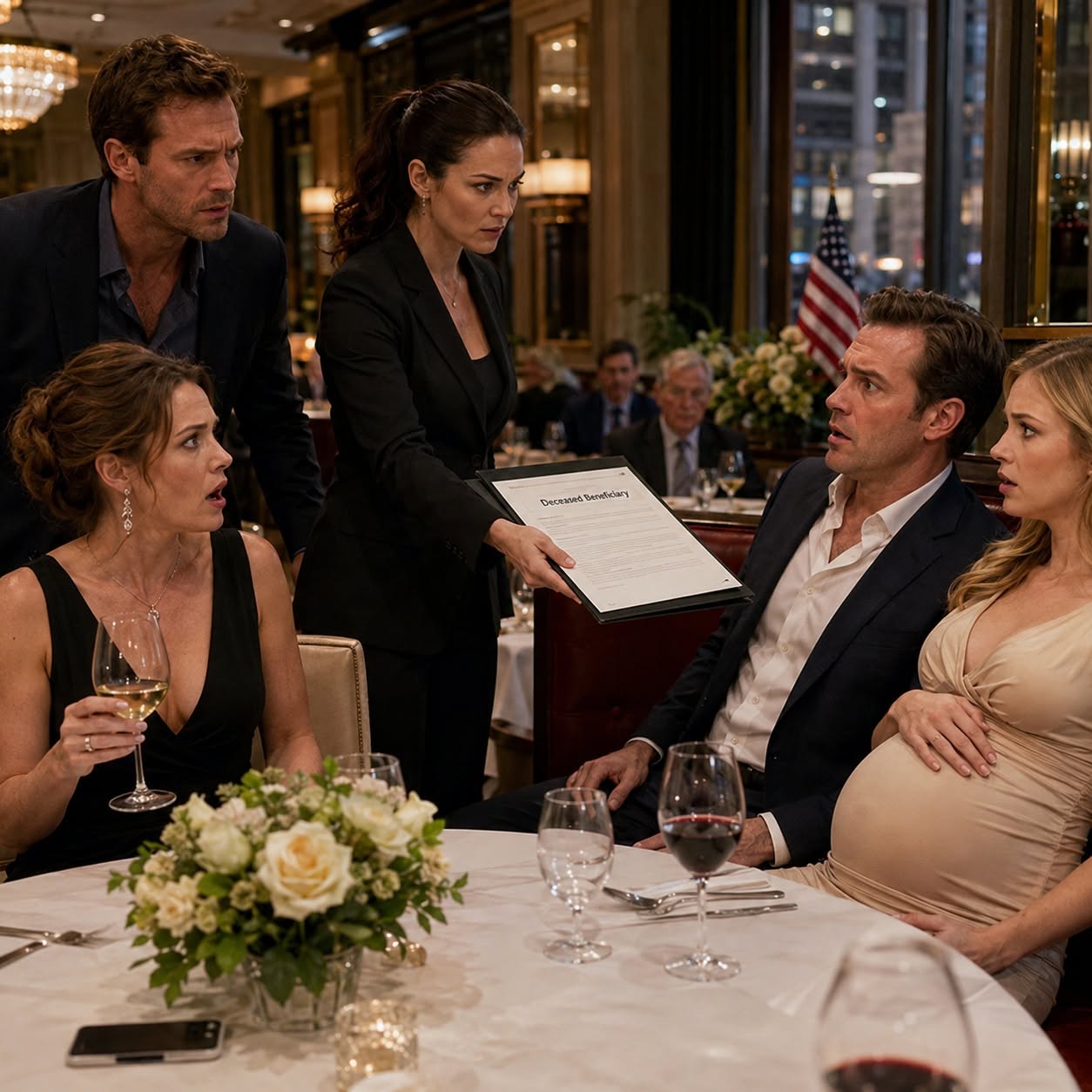
Daniel vaulted out of his seat, shouting, “Mom, stop it! Get back!”
Emily tried to stand up, using the heavy mahogany table to steady her thirty-two-week pregnant frame. But before she could get her footing, Margaret lunged forward with terrifying speed and drove the heel of her expensive leather shoe straight into Emily’s side, just beneath her heavy belly.