Chapter 3 - The Fallout Across the Wire
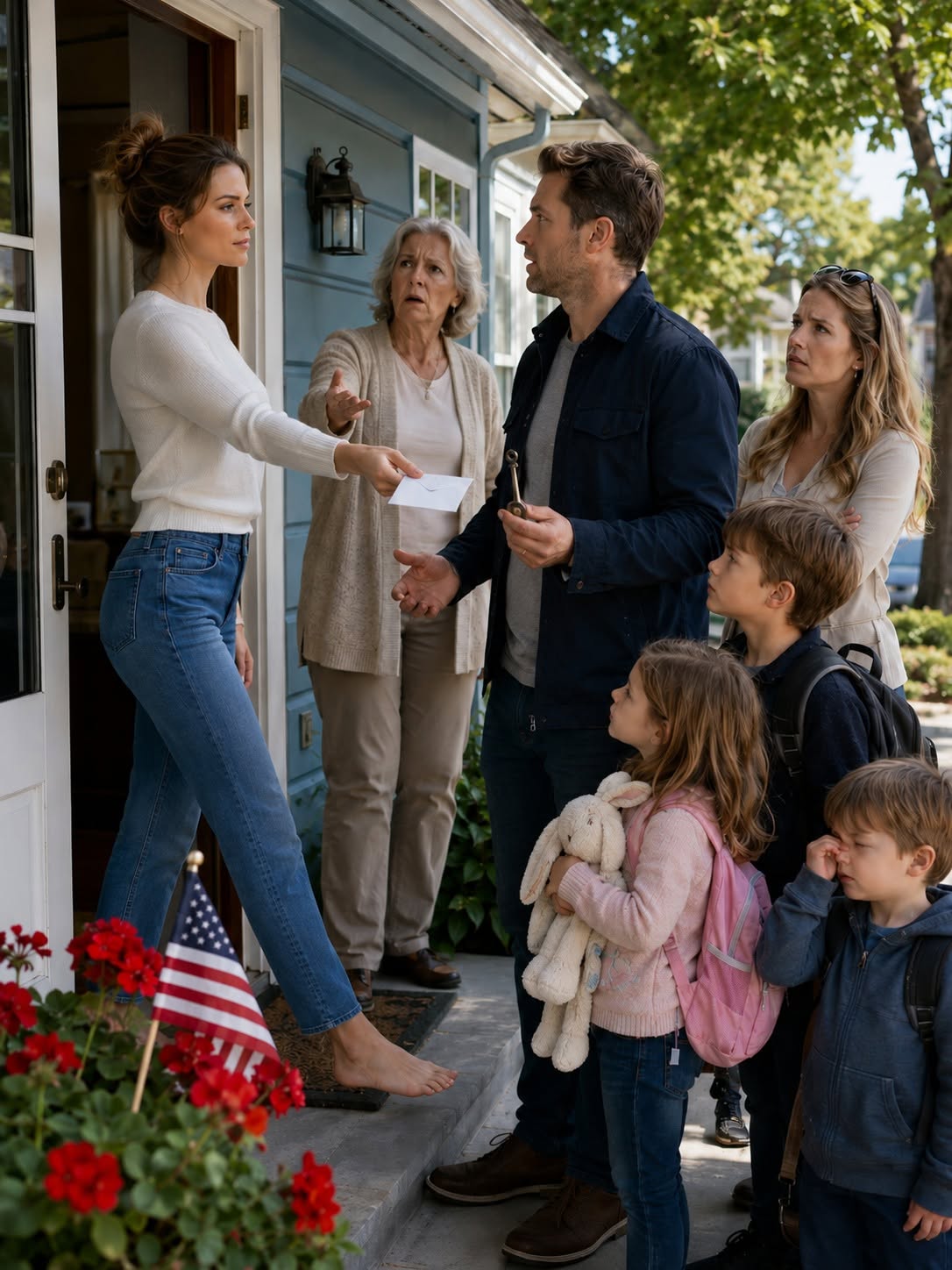
Within twenty minutes of Adam and Brooke’s hasty retreat—the screech of their SUV tires peeling away from the curb leaving a faint trail of burning rubber in the morning air—my phone began vibrating with an entirely new wave of digital warfare.
This time, it wasn't Adam or Brooke.
It was my mother.
Her messages started arriving in my private inbox one after another, rapid-fire dings that rattled against the kitchen counter like falling gravel.
Mom: How could you do this to your own flesh and blood? Mom: They had to drive all the way back to Beaverton with three crying children just to drop them off with Mrs. Gable down the street at the last minute! Mom: Your father is sick over this. He says you have turned into a cold, bitter woman who cares for nothing except herself. Mom: Don't bother calling us for Thanksgiving this year, Lily. You’ve made it abundantly clear you don't consider us family.
I stared at the screen, reading every harsh, manipulative word designed to trigger the exact buttons my parents had installed in my psyche since childhood. They expected me to panic. They expected me to burst into tears, grab my car keys, drive out to Beaverton, apologize profusely, and beg for their forgiveness while offering to take the kids for the entire week to prove my loyalty.
Instead, I locked my phone screen, set it face-down on the counter, and walked over to my easel by the living room window.
I picked up a wide bristle brush, dipped it into a rich mixture of ultramarine blue and titanium white, and began sweeping long, fluid strokes across a fresh canvas.
For the first time in my life, my hands were entirely steady. There was no guilt fluttering in my chest. There was only the clean, crisp smell of oil paint and the rhythmic sound of the ocean breeze rustling through the pine trees outside.
An hour later, my father tried a different tactic.
He called directly.
The phone rang ten times, filling the quiet house with its persistent electronic trill, before finally cutting off to voicemail.
Then he tried again.
And a third time.
When I still didn't pick up, a stern, tightly worded voicemail dropped into my inbox.
"Lily, this is your father. I don't know what kind of legal nonsense you think you’ve cooked up with Mr. Ellis, but you are destroying this family over a petty grudge. Your brother is under immense pressure at work, and you couldn't spare twenty-four hours to help him out? Call your mother immediately and apologize. We expect better from you."
I listened to the message once, deleted it without a second thought, and went back to mixing my colors.
For forty years, my role in the family dynamic had been defined entirely by my utility to others. If I was useful, I was loved, praised, and invited to Sunday dinners where I sat quietly listening to Adam boast about his latest promotions while I scraped by on freelance art commissions and retail wages. The moment I became inconvenient—the moment I asserted that my time, my space, and my emotional energy belonged to me—the entire structure of conditional affection collapsed like a house of cards.
Grandma Ruth’s voice echoed gently in my memory: "Remember, child, anyone who gets angry at you for setting a healthy boundary is someone who benefited immensely from you having none."
By mid-afternoon, the digital storm temporarily blew over, replaced by a strange, heavy stillness.
I spent the afternoon working on my painting, pausing only to brew a fresh pot of herbal tea and step out onto the front porch to water my red geraniums. The neighborhood was peaceful. A mail carrier waved cheerfully as he walked past my gate. The sun climbed high into the Oregon sky, warming the wooden boards beneath my feet.
It was my house. My porch. My morning, afternoon, and evening, uncompromised by anyone else’s emergency logistics.
Around 4:30 PM, just as I was wiping paint off my fingers in the kitchen sink, a car pulled into my driveway.
My body instantly tensed, old reflexes kicking in, expecting Adam to return with reinforcements or my parents arriving to stage an intervention.
I stepped cautiously to the living room window and peered through the lace curtain.
It wasn't an SUV. It was a modest, silver sedan.
And the person stepping out from the driver’s side wasn't my brother or my father.
May you like

It was a tall, familiar man with silver-streaked hair, wearing a tweed jacket and carrying a thick manila envelope under his arm.
Mr. Ellis.